Ingredients
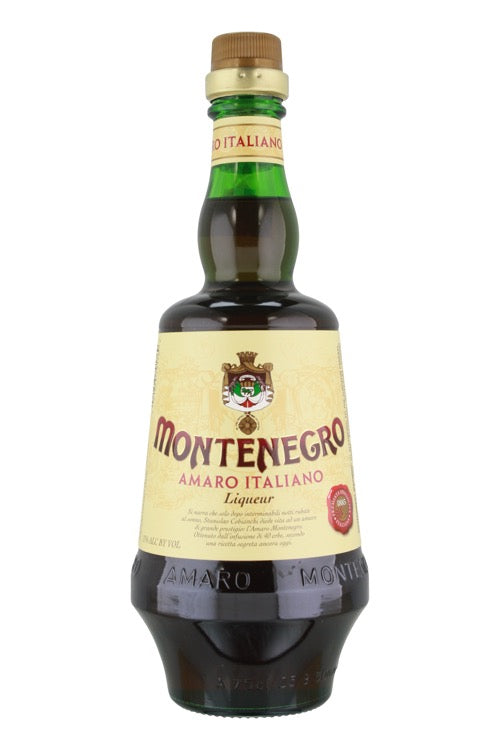
Amaro Montenegro is built from forty botanicals sourced across four continents, divided into six aromatic families and extracted separately — some by maceration, some by distillation — before being blended into a base the company calls Premio, the aromatic heart of the recipe. Only the Master Herbalist knows the full formula, which has stayed effectively unchanged since Stanislao Cobianchi wrote it in 1885. Bitter orange, coriander and vanilla dominate the profile, which is why Montenegro reads floral and citrusy rather than punishingly bitter.
- ✦Bitter orange peel
- ✦Sweet orange peel
- ✦Orange blossom (neroli)
- ✦Coriander seed
- ✦Vanilla
- ✦Cinnamon
- ✦Clove
- ✦Nutmeg
- ✦Marjoram
- ✦Oregano
- ✦Artemisia (wormwood)
- ✦Gentian root
- ✦Rhubarb root
- ✦Eucalyptus
- ✦Sandalwood
History of the Brand
Stanislao Cobianchi was sent to seminary by his family and left it for a life of travel, collecting plants and botanical knowledge across Europe, Asia and the Americas. In 1885 he opened a distillery in Bologna and released the herbal liqueur that would become Amaro Montenegro — a formula of forty botanicals he blended himself.
He first called it Elisir Lungavita, the elixir of long life. The name changed in 1896 in honor of Princess Elena of Montenegro, who married the future King Victor Emmanuel III of Italy — a piece of national romance that gave the bottle its crest and its enduring name.
Production moved to Zola Predosa outside Bologna, where Gruppo Montenegro still makes it. The role of Master Herbalist has passed through only a handful of hands in more than a century; each guards the recipe and personally oversees the blend of the Premio essence.
Poet Gabriele d'Annunzio called it "the liqueur of virtues," a phrase the brand still uses. Today Montenegro is Italy's best-selling amaro and, in the US, the bottle most often used to introduce newcomers to the category — soft enough to drink neat, aromatic enough to matter in cocktails.
Tasting Characteristics
Orange blossom and dried orange peel lead, followed by vanilla, coriander and a lift of eucalyptus over faint medicinal root.
Silky and gently sweet, with candied citrus, cola, vanilla and cinnamon. The bitterness is restrained — a soft gentian-and-wormwood edge that arrives late rather than up front.
Clean and moderately long, with rose-like florals, orange oil and a cooling menthol note that keeps it refreshing.
Flavor meter
How to serve it
- 01Neat at room temperature after dinner — the classic digestivo pour and the best way to read the forty botanicals.
- 02Chilled or over a large ice cube with an orange wheel, a common Italian summer serve.
- 03In a Black Manhattan variation, where its vanilla and citrus soften rye whiskey.
- 04Long with soda and lemon as a light aperitivo highball.
- 05Split with espresso, or as the amaro half of a Hard Start with Fernet-Branca.
Where to Get It
Among the easiest amari in the world to find. Montenegro is stocked by most supermarkets in Italy, virtually every well-stocked US bottle shop, and nearly every bar with an amaro list.
Local bottle shops
Reliably in stock on the Italian liqueur shelf — usually $25–$32 for a 750ml, with 375ml bottles common.
Online spirits retailers
Widely listed wherever shipping is permitted; look for gift sets around the holidays.
Bars and restaurants
The default house amaro in most Italian restaurants — an easy taste-before-you-buy.
Affiliate buying links coming soon.
Amaro Montenegro FAQ
What is Amaro Montenegro?
+
Amaro Montenegro is an Italian herbal liqueur created in 1885 by Stanislao Cobianchi in Bologna. It is made from forty botanicals extracted separately and blended around a secret aromatic base called Premio, bottled at 23% ABV, and drunk as a digestivo.
What does Amaro Montenegro taste like?
+
It is one of the least bitter amari: orange blossom, dried orange peel and vanilla lead, backed by coriander, cinnamon and a cooling eucalyptus note. The palate is silky and gently sweet, with the gentian bitterness arriving softly at the end.
What is the ABV of Amaro Montenegro?
+
Amaro Montenegro is bottled at 23% alcohol by volume (46 proof) — lighter than Fernet-Branca at 39% but stronger than Cynar at 16.5%.
What botanicals are in Amaro Montenegro?
+
Forty botanicals from four continents, grouped into six aromatic families. The recipe is secret, but the known and detectable ones include bitter and sweet orange peel, orange blossom, coriander, vanilla, cinnamon, clove, nutmeg, marjoram, oregano, artemisia, gentian and eucalyptus.
Is Amaro Montenegro a good amaro for beginners?
+
Yes — it is the standard recommendation for a first amaro. Its low bitterness, floral citrus aroma and soft sweetness make it approachable to drinkers who find Fernet-Branca or Braulio too aggressive.
How do you drink Amaro Montenegro?
+
Neat at room temperature after a meal is traditional. It is also excellent over a large ice cube with an orange wheel, long with soda as a light highball, or stirred into whiskey cocktails where its vanilla and citrus round out the spirit.
Why is it called Montenegro?
+
Cobianchi originally named it Elisir Lungavita. In 1896 he renamed it in honor of Princess Elena of Montenegro, who married the future King Victor Emmanuel III of Italy — hence the crest on the label.
Where can I buy Amaro Montenegro and what does it cost?
+
It is one of the most widely distributed amari in the world: expect to find it in most bottle shops and online retailers for roughly $25–$35 per 750ml, with smaller 375ml bottles often available.