AMARO AFICIONADO
Amaro Guide · 12 min read

23 Types of Italian Amaro

The brand-by-brand guide to Italy's most important herbal digestifs — history, tasting notes, region, ABV, and how to serve each.

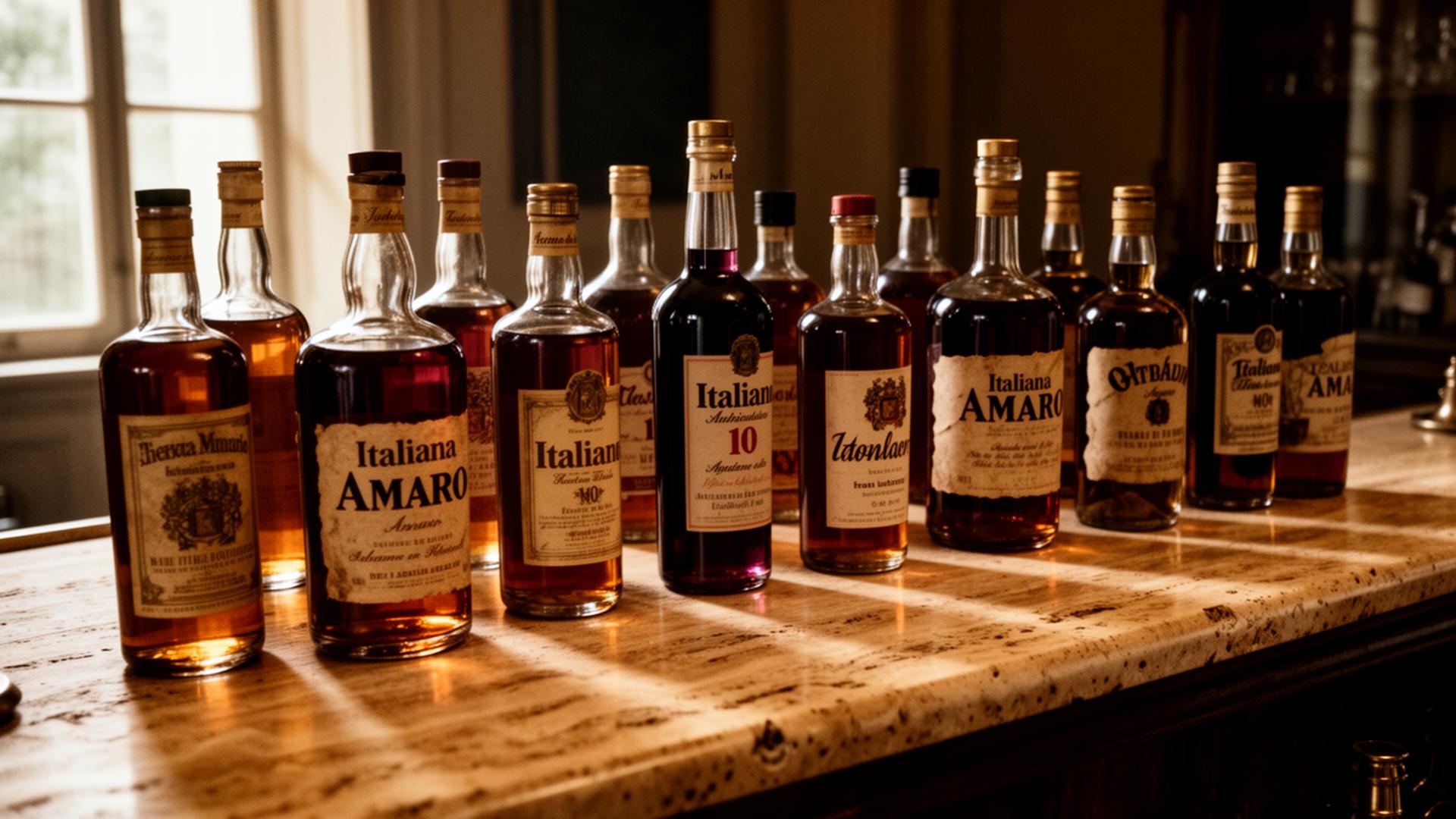
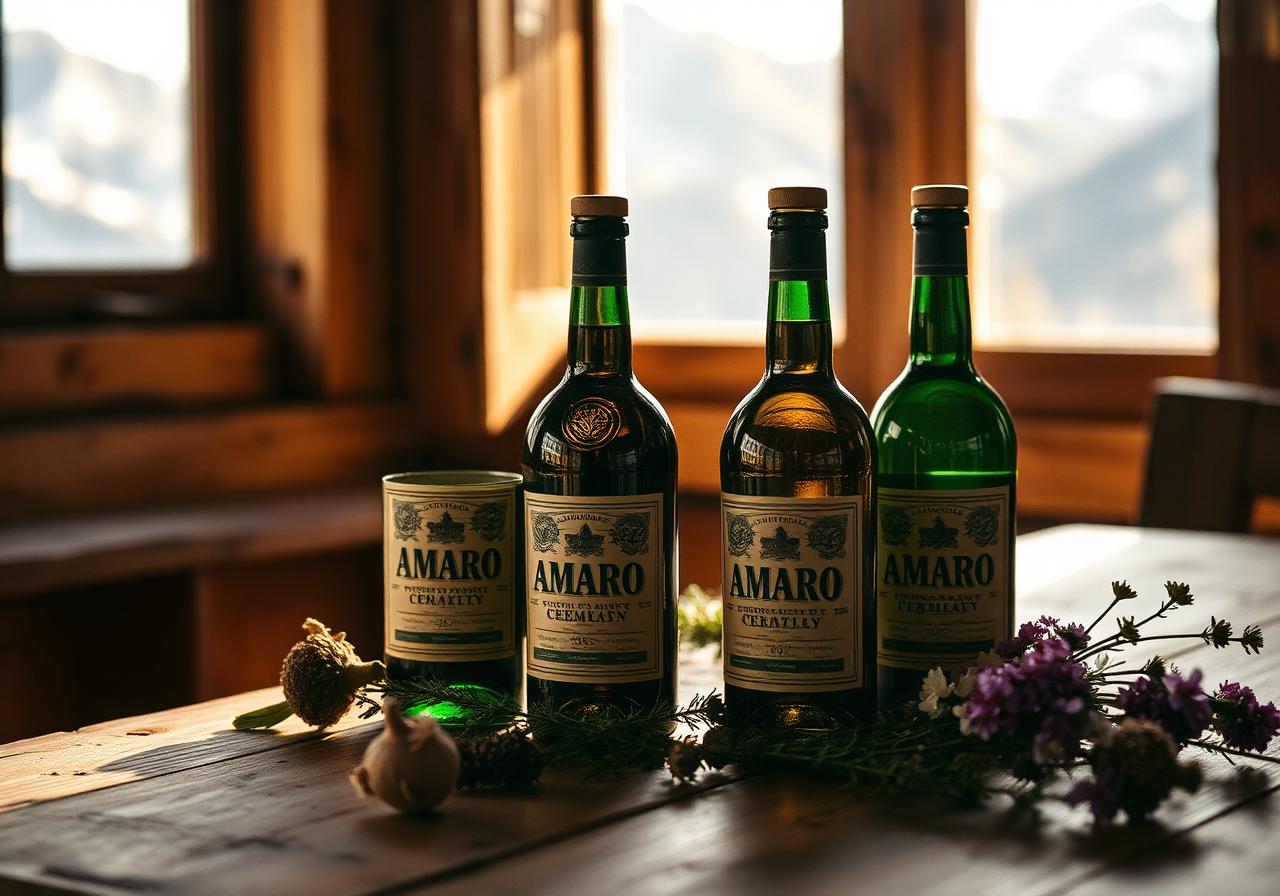
A curated collection of 23 different Italian amaro bottles — including Averna, Montenegro, Fernet-Branca, Cynar and Braulio — arranged on a vintage Italian marble bar top.
The shelf of an obsessive: 23 essential Italian amari, every region, every style.

Amaro — Italian for "bitter" — is the world's deepest, most regional category of herbal liqueur. Every Italian province has at least one, most have several, and the differences between brands are far greater than most newcomers expect. A bottle of Fernet-Branca and a bottle of Amaro Montenegro share a category but very little else.

This guide groups 23 essential Italian amaro brands into five flavor families, with the history, tasting notes and serving suggestions for each. Use it as a shelf-builder, a bar manual, or a study guide for your next trip to Italy.

Bittersweet Classics category of Italian amaro — the household-name amari italians actually drink after dinner — balanced, caramel-edged, deeply herbal.
01

Bittersweet Classics

The household-name amari Italians actually drink after dinner — balanced, caramel-edged, deeply herbal. The gateway category for anyone learning what amaro tastes like.

Amaro Averna

Caltanissetta, Sicily · Since 1868 · 29% ABV

Caramel · Orange peel · Mediterranean herbs

History

Created in 1868 by textile merchant Salvatore Averna from a secret monastery recipe gifted by the Capuchin friars of Santo Spirito Abbey in Caltanissetta. Four generations of the Averna family produced it before Campari Group acquired the brand in 2014. Production still happens in Sicily.

Taste

Medium-bodied and unmistakably sweet on the entry, with burnt-sugar caramel and dried orange giving way to a gently bitter herbal finish. The benchmark 'easy' amaro — what most Americans first learn the category from.

How to serve

Neat with an orange twist, or in a Black Manhattan in place of vermouth.
Amaro Montenegro

Bologna, Emilia-Romagna · Since 1885 · 23% ABV

Rose · Vanilla · Bitter orange

History

Created by Stanislao Cobianchi in Bologna in 1885 and named in honor of Princess Elena of Montenegro on her wedding to Italy's Prince Vittorio Emanuele. The recipe still calls for 40 botanicals from four continents, blended in a process so guarded that only one person — the Master Herbalist — knows the full formula.

Taste

The most aromatic of the mainstream amari. Soft, floral, almost dessert-like, with rose petal, sweet orange, vanilla, and a gentle eucalyptus finish. Low bitterness makes it a favorite of cocktail bartenders.

How to serve

Neat over a single rock, or in a Paper Plane.

Amaro Nonino Quintessentia

Percoto, Friuli-Venezia Giulia · Since 1992 · 35% ABV

Grappa barrel · Saffron · Alpine herbs

History

The Nonino family of distillers, who pioneered single-varietal grappa in the 1970s, launched Quintessentia in 1992. It is the only amaro built on a base of ÙE — Nonino's grape distillate — and aged in barriques and small ex-sherry casks for up to five years. The cult amaro of the modern bartending world.

Taste

Lighter, drier, and brighter than most amari. Honey, dried apricot, saffron, gentian and a long oak-driven finish. The keystone ingredient of the Paper Plane.

How to serve

Neat in a snifter, or in a Paper Plane.

Amaro Ramazzotti

Milan, Lombardy · Since 1815 · 30% ABV

Orange · Anise · Cardamom

History

Ausano Ramazzotti began bottling his herbal infusion in Milan in 1815, making it one of the oldest commercial amari in the world. By the late 1800s the Caffè Ramazzotti next to La Scala had turned the drink into Milanese after-theatre ritual. Now owned by Pernod Ricard.

Taste

Dark, bittersweet, with pronounced orange peel and anise on the nose, cardamom and clove on the palate. Slightly more bitter than Averna, with a cola-like finish.

How to serve

Over ice with a splash of soda and a half-wheel of orange.

Amaro Lucano

Pisticci, Basilicata · Since 1894 · 28% ABV

Wild mountain herbs · Citrus · Mint

History

Founded by pastry chef Pasquale Vena in the small town of Pisticci in 1894. The recipe — built around more than 30 herbs from the Lucanian Apennines — has never left the Vena family, now in its fourth generation. The unofficial digestif of southern Italy.

Taste

Soft and rounded, with a savory herbal core (mint, wormwood, gentian) balanced by warm citrus and a long, dry finish. Lower bitterness than Averna; higher complexity.

How to serve

Chilled, neat, after a heavy southern Italian meal.

Amaro Meletti

Ascoli Piceno, Marche · Since 1870 · 32% ABV

Anise · Violet · Saffron

History

Silvio Meletti perfected his anise-forward amaro in 1870 in the central Italian region of Marche, and the family soon opened the still-operating Caffè Meletti in Ascoli Piceno — a Liberty-style café that hosted Hemingway, Sartre, and the king of Italy. The bottle's label hasn't really changed since 1907.

Taste

Sweeter and silkier than most amari, with anise, candied violet, saffron and gentle citrus. Reads as 'dessert in a glass' but still finishes properly bitter.

How to serve

Hot pour over a scoop of vanilla gelato (the affogato amaro).

Alpine & Herbal category of Italian amaro — cool-climate amari built around gentian root, mountain wildflowers, juniper, and pine.
02

Alpine & Herbal

Cool-climate amari built around gentian root, mountain wildflowers, juniper, and pine. Bracing, mineral, and unmistakably tied to the Dolomites, Valtellina, and Friulian foothills.

Braulio

Bormio, Valtellina (Lombardy) · Since 1875 · 21% ABV

Pine · Juniper · Yarrow

History

Created in 1875 by pharmacist Francesco Peloni in Bormio, a ski town at 4,000ft in the heart of the Alps. Still aged for two years in Slavonian oak barrels in cellars beneath the town. The Stelvio Pass runs right by the distillery.

Taste

Crisp, mentholated, with juniper, pine sap, wormwood and chamomile on the nose. The palate is bittersweet and surprisingly delicate. Tastes like a deep breath of mountain air.

How to serve

Cellar-cold, neat, after skiing (or pretending you went).

Amaro Sibilla (Varnelli)

Pievebovigliana, Marche · Since 1868 · 34% ABV

Honey · Gentian · Wild herbs

History

The Varnelli family has been wild-harvesting herbs from the Sibillini mountains since 1868, originally for a roving herbalist named Girolamo Varnelli. Amaro Sibilla — named for the prophetic Sibyl who supposedly lived in those mountains — is still made by open-fire infusion, a technique no other producer uses today.

Taste

Deeply bittersweet, with raw mountain honey, gentian, saffron and smoke. Long, dry, savory finish. A favorite of working bartenders for its restraint.

How to serve

Neat in a small snifter; do not chill.

Amaro dell'Erborista (Varnelli)

Pievebovigliana, Marche · Since 1980s · 21% ABV

Bee pollen · Bitter herbs · Caramelized honey

History

The unfiltered, unstabilized version of Varnelli's wild-herb amaro. Bottles arrive cloudy with sediment, sweetened only with raw honey from the Sibillini foothills, and the producer recommends drinking within a year of bottling. Cult status among amaro obsessives.

Taste

Thick, almost syrupy, with raw honey, wax, wormwood, and a profoundly bitter herbal core. Tastes alive — closer to a tincture than a digestif.

How to serve

Room temperature, neat, in a thimble.

Cardamaro

Asti, Piedmont · Since 1950s · 17% ABV

Cardoon · Blessed thistle · Moscato wine

History

Produced by the Bosca family in Piedmont since the 1950s using a base of Moscato wine infused with cardoon and blessed thistle, then barrel-aged. Technically classified as a vino amaro (wine-based amaro), Cardamaro hit the U.S. bar scene in 2012 and has been a sommelier favorite ever since.

Taste

Lighter ABV, wine-soft entry, with a savory bitter-greens core — chicory, artichoke, cardoon — and a long, dry, almost amontillado-like finish.

How to serve

Chilled, neat, before dinner. Or 50/50 with Cocchi Americano.

Carciofo & Rabarbaro category of Italian amaro — the vegetal corner of the amaro world: artichoke leaf (carciofo) and chinese rhubarb root (rabarbaro) bring an earthy, savory bitterness you won't find anywhere else in the drinks aisle.
03

Carciofo & Rabarbaro

The vegetal corner of the amaro world: artichoke leaf (carciofo) and Chinese rhubarb root (rabarbaro) bring an earthy, savory bitterness you won't find anywhere else in the drinks aisle.

Cynar

Padua, Veneto · Since 1952 · 16.5% ABV

Artichoke · Bitter herbs · Cola

History

Created by Venetian entrepreneur Angelo Dalle Molle in 1952 as an aid for the Italian post-war liver. Made with 13 herbs and plants, including the artichoke leaf (Cynara scolymus) that gives the amaro its name and its iconic green-and-red label. Now owned by Campari Group.

Taste

Lower-ABV, lower-sugar than most amari. Savory and earthy on the nose, with chocolate, cola, and a gentle vegetal bitterness from the artichoke. Surprisingly versatile in cocktails.

How to serve

On the rocks with an orange slice, or in a Cynar Negroni.

Cappelletti Sfumato Rabarbaro

Trentino-Alto Adige · Since 1906 (Sfumato release 2010s) · 20% ABV

Smoked Chinese rhubarb · Tar · Cocoa

History

The Cappelletti family has produced aperitifs and amari since 1906. Sfumato is their take on rabarbaro — Chinese rhubarb root that is smoked over wood before being macerated. Released to the modern U.S. market in the 2010s, it has since become a bartender go-to for adding smoke without using mezcal.

Taste

Smoke-forward but balanced, with bitter rhubarb root, tar, cocoa and a touch of menthol. Drier than most amari.

How to serve

On the rocks with a lemon twist; substitute for vermouth in a Manhattan.

Rabarbaro Zucca

Milan, Lombardy · Since 1845 · 16% ABV

Chinese rhubarb · Smoke · Orange

History

Ettore Zucca opened his café under the arcades of Milan's Galleria Vittorio Emanuele in 1845 and began producing his eponymous rabarbaro shortly after. Verdi, Toscanini and the Italian royal family were regulars. The rhubarb is dried slowly over open fire before maceration, lending the gentle smoke.

Taste

Lighter and rounder than Sfumato, with sweet rhubarb compote, orange peel, and a whisper of campfire smoke. Excellent in highballs.

How to serve

1 oz Zucca, 4 oz tonic, big slice of orange — the Milanese highball.

China Martini

Turin, Piedmont · Since 1864 · 31% ABV

Cinchona bark · Quinine · Spice

History

Pronounced KEY-na (it means cinchona, the bark that gives us quinine), not 'china' the country. Created in 1864 by chemist Teofilo Sola of Turin and acquired by Martini & Rossi in the 1970s. One of the original quinine-forward amari, predating tonic water by decades.

Taste

Sharp, dry, and assertively bitter on the entry, with quinine, clove, cinnamon and a hint of cocoa. Tonic water's adult ancestor.

How to serve

On the rocks with a wedge of lemon, or as a base for the Hanky Panky.

Amaro Pasubio (Cappelletti)

Trentino, Veneto Alps · Since Modern revival · 16% ABV

Blueberry · Pine · Smoke

History

A vino amaro from the Cappelletti family in the Vicentine Alps, built around wild blueberries and mountain pine from Monte Pasubio — a peak in the Veneto Dolomites that saw some of the most brutal fighting of World War I. The recipe nods to traditional alpine 'medicine' from that era.

Taste

Soft wine base, with fresh blueberry, pine resin, and a gentle smoky finish. Tastes like a forest in late summer.

How to serve

Cold, neat, after dinner. Or topped with prosecco as a spritz.

Fernet & High-Intensity category of Italian amaro — bracing, menthol-driven, deeply bitter — the espresso-shot wing of the amaro family.
04

Fernet & High-Intensity

Bracing, menthol-driven, deeply bitter — the espresso-shot wing of the amaro family. Beloved by bartenders worldwide as a 'handshake' or wake-up shot.

Fernet-Branca

Milan, Lombardy · Since 1845 · 39% ABV

Menthol · Myrrh · Saffron

History

Created in Milan in 1845 by Bernardino Branca and reportedly used as a cholera remedy during the 1850s outbreak. The recipe — 27 herbs from four continents, including Indian myrrh, Saffron from Iran, and South American gentian — is known to only a handful of family members. Aged one year in oak.

Taste

An assault, then a revelation. Menthol, eucalyptus, saffron, bitter herbs, and a finish so dry it almost crackles. The world's most-shipped fernet for a reason.

How to serve

Ice-cold shot followed by a ginger beer chaser (the bartender's handshake).

Santa Maria al Monte

Genoa, Liguria · Since 1892 · 40% ABV

Mint · Bitter orange · Anise

History

Created by Felice Bisio at Genoa's Santa Maria al Monte basilica in 1892 from a Franciscan friars' recipe. The high-octane Ligurian alternative to Fernet — sharper on mint, slightly drier on the finish. Still produced in small batches in Genoa.

Taste

High-alcohol, high-bitterness, with cool mint, anise, bitter orange, and a long camphor finish. Less menthol-forward than Fernet, more anise-driven.

How to serve

Ice cold, neat. The Genoese antidote to seafood overload.

Amaro Formidabile

Rome, Lazio · Since 2014 · 34% ABV

Wild fennel · Hyssop · Bitter orange

History

A new-wave Roman amaro launched in 2014 by Davide Fregonese and Andrea Loreti. Made with 21 botanicals — heavy on Roman wild fennel and licorice from Calabria — and aged in chestnut. The poster child for the modern Italian craft amaro movement.

Taste

Intense, almost savage on the entry — fennel, hyssop, bitter orange, and a peppery menthol heat. Long, slightly resinous finish.

How to serve

Neat in a tasting glass; not for the faint of palate.

Southern & Citrus category of Italian amaro — sun-drenched amari from calabria, campania and friuli where citrus, anise and warm spice take the lead over alpine herbs.
05

Southern & Citrus

Sun-drenched amari from Calabria, Campania and Friuli where citrus, anise and warm spice take the lead over alpine herbs. Easygoing, food-friendly, and built for the after-pasta moment.

Vecchio Amaro del Capo

Spilinga, Calabria · Since 1966 · 35% ABV

Calabrian citrus · Licorice · Juniper

History

Produced by the Caffo distillery in the southern tip of Calabria since 1966, using 29 herbs, fruits and roots harvested from the Aspromonte and the Calabrian coast. Sold in a distinctive dome-capped bottle. Now the best-selling amaro at retail in Italy.

Taste

Round, sweet entry of orange and bergamot, then a savory wave of juniper and licorice, finishing with peppermint cool. Designed to be served straight out of the freezer.

How to serve

Bottle in the freezer, glass in the freezer, then pour.

Amaro CioCiaro

Frosinone, Lazio · Since 1873 · 30% ABV

Bitter orange · Gentian · Cinchona

History

Named after the Ciociaria region southeast of Rome, this amaro has been produced since 1873 and is now made by Distillerie Stock. Long used in cocktail bars as a stand-in for the discontinued Amer Picon — its bitter orange profile is uncannily close.

Taste

Bittersweet orange marmalade, gentian, quinine, and a touch of dried cocoa. Dry-ish finish. The bartender's secret weapon for tiki and modern classics.

How to serve

In a Brooklyn (substitute for Amer Picon), or on the rocks with a flamed orange.

Jefferson Amaro Importante

Pizzo, Calabria · Since 2017 · 30% ABV

Bergamot · Calabrian chili · Eucalyptus

History

Launched in 2017 by the Vincenzi family in Calabria, the Jefferson is built from 27 botanicals including bergamot, eucalyptus, citrus and a touch of Calabrian peperoncino. A modern flagship of southern Italian amaro-making and a regular on cocktail lists across Milan and London.

Taste

Bright bergamot up front, soft bitter-herb mid-palate, and a slow build of warm chili on the finish. Elegant and unmistakably southern.

How to serve

Neat over a single rock with a strip of bergamot peel.

Amaro Lazzaroni

Saronno, Lombardy · Since 1851 · 25% ABV

Amaretti biscuit · Spice · Bitter orange

History

The Lazzaroni family has baked amaretti biscuits in Saronno since 1718 and started producing amaro in 1851. Their digestif is famously infused with the same crushed amaretti — a literal liquid extension of their bakery — and bottled in distinctive ceramic-style glass.

Taste

Soft, marzipan-toasted entry of amaretto and spice, with bittersweet orange and a clean herbal finish. The most dessert-leaning amaro on this list.

How to serve

Neat with espresso, or as the heart of a Café Corretto.

Amaro Tosolini

Povoletto, Friuli-Venezia Giulia · Since 1943 (Amaro release 2000s) · 30% ABV

Friulian herbs · Bitter orange · Grappa barrel

History

The Tosolini family of grappa distillers in Friuli released their amaro in the 2000s, built on a base of Friulian grappa and aged in former grappa barrels. A modern cousin of Nonino's Quintessentia, with more aromatic punch and slightly less oak.

Taste

Bright and herbal — gentian, mint, citrus zest — with a grappa-driven warmth and a long, dry finish. A true after-dinner amaro.

How to serve

Room temperature, neat, in a small grappa-style glass.

FAQ

Frequently asked questions about Italian amaro

What is amaro and how is it different from other liqueurs?

Amaro (literally 'bitter' in Italian) is a category of Italian herbal liqueur traditionally served as a digestif after meals. It's made by macerating dozens of herbs, roots, citrus peels, flowers and spices in a neutral spirit or wine base, then sweetening lightly and often aging in oak. What sets amaro apart from generic herbal liqueurs is the deliberate bitterness — almost every amaro features gentian, cinchona, wormwood or rhubarb — balanced by sweetness and aromatic complexity.

How many types of Italian amaro are there?

Hundreds of amari are produced commercially across Italy, with most regions having at least one signature brand. The category is usually grouped into five broad styles: bittersweet classics (Averna, Montenegro, Ramazzotti), alpine herbal amari (Braulio, Varnelli), carciofo and rabarbaro (Cynar, Sfumato), fernet-style high-intensity (Fernet-Branca), and southern citrus amari (Del Capo, Lucano). This guide covers 23 of the most important.

What is the best amaro to start with?

Amaro Montenegro and Amaro Averna are the two most beginner-friendly Italian amari — both are bittersweet, low-bitterness, and easy to enjoy neat over a single ice cube. From there, Amaro Nonino Quintessentia is the natural next step for cocktail drinkers, and Fernet-Branca is the rite-of-passage for adventurous palates.

Should amaro be served cold or at room temperature?

It depends on the style. High-ABV, low-sugar fernet-style amari (Fernet-Branca, Santa Maria al Monte, Del Capo) are best served ice-cold, often straight from the freezer. Bittersweet classics and alpine herbal amari (Averna, Braulio, Sibilla) reveal more complexity at cool cellar temperature — around 55°F — in a small snifter or rocks glass with one big cube.

Is amaro good for digestion?

Amaro originated as medicinal tonics from monasteries and apothecaries, and the bitter herbs they contain — gentian, wormwood, cinchona, artichoke — have a long traditional reputation for stimulating digestion. While modern medicine offers no formal endorsement, the cultural ritual of the after-dinner amaro is alive and well in every Italian region.

What's the difference between amaro and Aperol?

Aperol is technically an aperitivo, not an amaro — it's a lower-ABV (11%), lower-bitterness, higher-sugar bitter liqueur designed to be drunk before a meal, usually in a spritz. Amaro is higher-ABV (typically 20–40%), more bitter, more complex, and traditionally served after the meal as a digestif.

Now mix one into a cocktail

You know the bottles — try them in the recipes that made each one famous.

Start with the Paper Plane