Ingredients
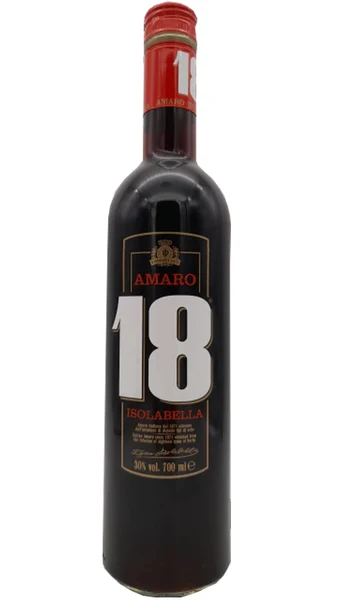
Eighteen herbs, roots and spices — the count is the name — assembled in the classic Milanese register: bitter roots balanced by caramel sweetness and warm baking spice.
- ✦Gentian root
- ✦Rhubarb root
- ✦Bitter orange peel
- ✦Cinnamon
- ✦Cloves
- ✦Cardamom
- ✦Liquorice
- ✦Wormwood
History of the Brand
The Isolabella house was founded in Milan in 1871, during the boom decades when Lombardy's distillers turned pharmacy recipes into commercial liqueurs.
Amaro 18 takes its name from the number of botanicals in the formula, a common nineteenth-century convention for signalling complexity on a label.
The brand was a household name in northern Italy for much of the twentieth century before quieter decades pushed it to the margins.
It survives as a well-priced, traditionally styled Milanese amaro and a useful reference point for what the city's bottles tasted like before the modern bitter revival.
Tasting Characteristics
Caramel, orange peel, cinnamon and clove.
Sweet caramel and dried fruit, then gentian and rhubarb bitterness, warm spice throughout.
Medium, spiced, moderately bitter.
Flavor meter
How to serve it
- 01Neat at room temperature after dinner.
- 02Over ice with an orange twist.
- 03With soda and lemon.
- 04In a Boulevardier in place of sweet vermouth.
- 05Stirred into espresso.
Where to Get It
Widely available in Italy at modest prices; occasional export through Italian importers.
Italian grocers
Often the best-value bottle on the shelf, $30–$40.
Online spirits retailers
Search 'Amaro 18 Isolabella'.
Milan
Still poured in older neighbourhood bars.
Affiliate buying links coming soon.
Amaro 18 Isolabella FAQ
What is Amaro 18 Isolabella?
+
A traditional Milanese amaro from the Isolabella house, made with eighteen herbs, roots and spices and bottled at around 30% ABV.
Why the number 18?
+
It refers to the count of botanicals in the recipe, a common way nineteenth-century Italian producers advertised complexity.
What does it taste like?
+
Bittersweet and spiced — caramel and dried fruit over gentian and rhubarb, with cinnamon and clove running through.
Is it a good beginner amaro?
+
Yes. The balance of sweetness and bitterness makes it approachable, and it is usually inexpensive.