Amaro vs Digestivo vs Aperitivo
Three Italian words. Three different moments of the day. One delicious, slightly bitter universe — and once you can tell them apart, the whole world of Italian drinking opens up.
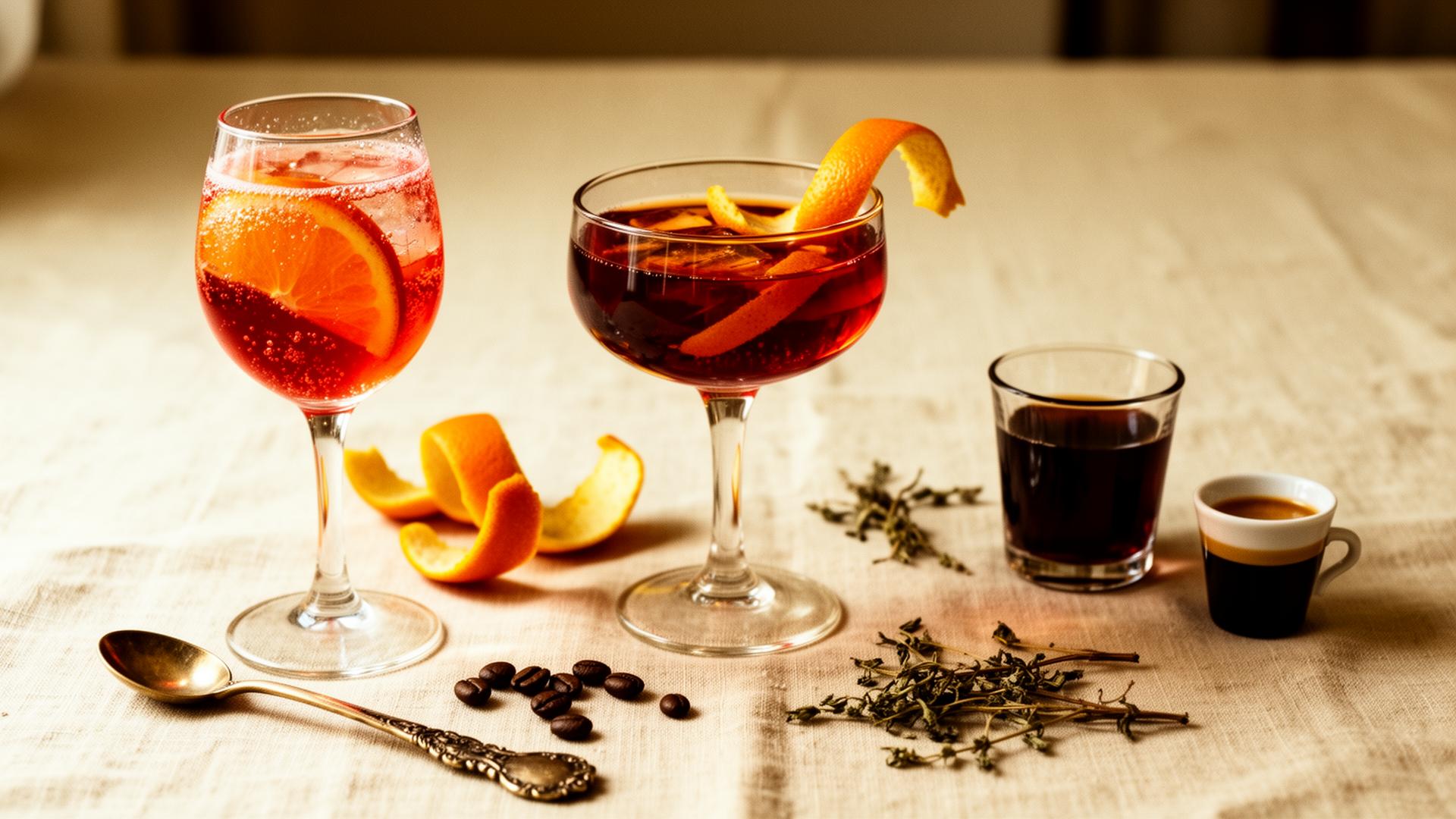
Walk into any Italian bar between 6 and 8 p.m. and you'll see it: little glasses of something glowing orange or ruby red, a bowl of olives, people laughing, no one in a hurry to order dinner. That's aperitivo. Three hours later, after the pasta and the wine, someone at the next table is sipping something dark and herbal from a tiny glass. That's digestivo. And amaro? Amaro is the family name for most of the bitter, beautiful, herb-soaked liqueurs that fall on either side of dinner.
The three words get tangled in English menus all the time. Here's the warmest, simplest way to keep them straight — plus the bottles, the cocktails, and the rituals that make each one matter.
The 30-second answer
- Aperitivo — light, citrusy, lower-proof. Drunk before dinner to wake up the appetite. Think Aperol Spritz, Campari soda.
- Digestivo — heavier, herbal, higher-proof. Drunk after dinner to settle the stomach. Most amari live here.
- Amaro — literally means "bitter" in Italian. A whole category of herbal liqueurs, most of which are digestivi, a few of which (Aperol, Campari) are technically aperitivi.
1. Aperitivo — the opening act
Latin aperire, "to open"
The whole point of an aperitivo is to open the appetite — and to slow you down. Italians treat the hour before dinner as sacred. You order a low-proof bitter drink, the bar puts out a little plate of crisps or olives or focaccia, and for sixty unhurried minutes, nobody is going anywhere.
Aperitivi are built to be friendly: 11–24% ABV, citrus-forward, often diluted with soda or prosecco. The bitterness is there, but it's polite. It nudges your stomach awake; it doesn't punch it.
Bottles to know: Aperol (gentle, orange, 11%), Campari (assertive, ruby, ~24%), Select (the Venetian alternative), Cynar (artichoke-based, can swing either way), Cocchi Americano (wine-based, beautiful in cocktails).
Try this first: A classic Americano (Campari, sweet vermouth, soda) or the bubbly Negroni Sbagliato. If you want lighter still, the Bicicletta (Campari + white wine + soda) is what Italian grandmothers drink before lunch.
2. Digestivo — the closing ritual
Latin digerere, "to digest"
Italians believe — with the unshakable confidence of a culture that has been eating beautifully for two thousand years — that the right small glass after a heavy meal actually helps you digest. Whether or not the science fully agrees, the ritual is real, and it's lovely. Espresso first, then the digestivo, then maybe another espresso. Nobody rushes you out.
Digestivi are heavier than aperitivi: 25–45% ABV, big herbal profiles, often a noticeable bitterness or menthol. Some are sweet and caramel-laced (Averna, Montenegro), some are bracingly minty (Branca Menta), some are pure herbal medicine in a glass (Fernet-Branca, Underberg). The genre includes most amari — but also grappa, sambuca, and limoncello, which are digestivi without being bitter.
Bottles to know: Amaro Averna, Amaro Montenegro, Amaro Nonino, Fernet-Branca, Cynar (yes, the same Cynar — Italians drink it both before and after), Ramazzotti, Amaro Lucano. For the deep dive, see our full guide to the types of amaro.
Try this first: Sip it neat. Two ounces of Averna with a hot espresso is the most Italian thing you can do. When you're ready for cocktails, the Black Manhattan (rye + Averna) and the Paper Plane (bourbon, Aperol, Amaro Nonino, lemon) are the two modern classics that turned a generation of Americans into amaro drinkers.
3. Amaro — the big tent
Italian, "bitter"
Amaro is the word that confuses everyone — because it isn't a moment in the day, it's a flavor profile. Amaro just means "bitter." Any Italian liqueur that leans bitter and herbal can wear the name. Most of them are digestivi. A few (Aperol, Campari, Select) are aperitivi. One or two (Cynar, Cardamaro) work happily in both worlds.
Every amaro starts the same way: neutral spirit, sugar, and a recipe of botanicals — roots, barks, citrus peels, flowers, sometimes 40 or more ingredients — macerated, then aged. The botanicals are why no two amari taste alike. Montenegro is floral and soft. Fernet-Branca is bracing and minty. Cynar is vegetal. Nonino is silky and oak-aged. Averna is caramel-sweet. They are siblings, not twins.
You can spend a lifetime here, and Italians do. Each region of Italy has its own amaro tradition — see our Drinker's Map of Italy for the geography of it.
The cheat sheet
| Aperitivo | Digestivo | |
|---|---|---|
| When | Before dinner | After dinner |
| Why | Opens the appetite | Settles the stomach |
| ABV | 11–24% | 25–45% |
| Profile | Bright, citrusy, lightly bitter | Heavy, herbal, deeply bitter |
| Served | With soda, prosecco, or on ice | Neat, room temp or chilled |
| Star bottles | Aperol, Campari, Cocchi Americano | Averna, Montenegro, Fernet, Nonino |
Quick questions, quick answers
Is Campari an amaro?
Technically no — Campari is classified as a bitter aperitivo, not a digestivo amaro. But it lives in the same broader family of bitter Italian liqueurs, and most bartenders and amaro lovers treat it as amaro-adjacent. The line is fuzzy and that's okay.
Is amaro the same as a digestif?
"Digestif" is the broader category (drinks taken after a meal); "amaro" is a specific Italian style within it. All amari are digestifs. Not all digestifs are amari — cognac, grappa, and port are digestifs too.
Do you drink aperitivo before or after dinner?
Before. An aperitivo opens the meal. A digestivo closes it. Drinking Fernet at 6 p.m. before you've eaten is the Italian equivalent of putting pineapple on a pizza — technically possible, but it'll raise eyebrows.
What's the difference between Aperol and Campari?
Same parent company, very different drinks. Aperol is 11% ABV, sweeter, lighter, orange-forward — built for the Spritz. Campari is around 24%, far more bitter, with that signature ruby color and the backbone of every Negroni and Americano you've ever loved.
Keep going
Ready to actually pour something?
Visit amaroafficionado.com for our full library of amaro recipes, glassware guides, and city-by-city bar picks.