Ingredients
Romana Amaro is a liquore classico built on a maceration of bitter roots, barks, herbs and citrus peels in neutral spirit, sweetened and colored to its deep mahogany tone. Like nearly every Italian amaro, the exact recipe is proprietary, but the profile points clearly at a gentian-and-bitter-orange backbone lifted with warming baking spice and a distinct note of anise and licorice — a family resemblance to the Romana house's sambuca heritage.
- ✦Gentian root
- ✦Bitter orange peel
- ✦Sweet orange peel
- ✦Licorice root
- ✦Star anise
- ✦Cinchona bark
- ✦Rhubarb root
- ✦Cardamom
- ✦Cinnamon
- ✦Clove
- ✦Wormwood
- ✦Mint
- ✦Caramel and sugar
History of the Brand
Romana is best known worldwide for Romana Sambuca, the anise liqueur that became a standard of Italian after-dinner service and a fixture on American back bars from the 1970s onward. Romana Amaro is its bitter counterpart, released for drinkers who wanted the same Roman-classic identity in a digestivo rather than a sweet anisette.
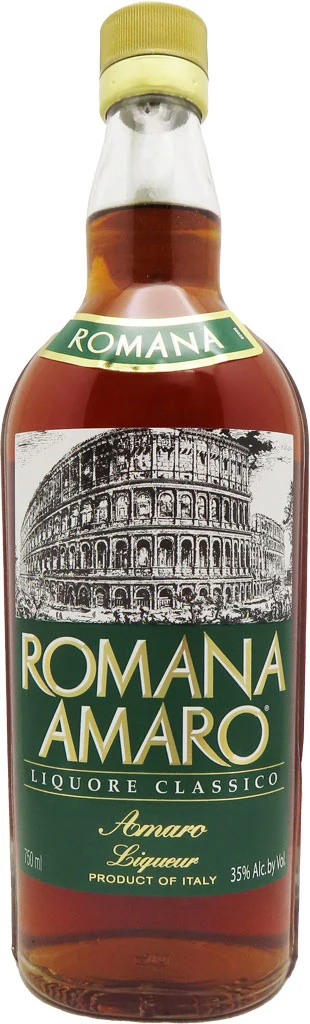
The label is the brand's whole argument: an engraving of the Colosseum sits above the words Liquore Classico, tying the bottle to the imperial city and to the Roman café tradition of finishing a long meal with something dark, bitter and herbal rather than another glass of wine.
Romana Amaro belongs to the broad family of mid-century Italian amari that were built for everyday drinking — 35% ABV, generously spiced, sweet enough to serve neat and cheap enough to keep on the shelf. That positioning kept it in export markets even as small-batch amari commanded higher prices.
In the modern American cocktail revival, bottles like Romana Amaro have found a second life as the workhorse amaro: the one bartenders reach for when a drink needs herbal bitterness and body without spending a premium pour.
Tasting Characteristics
Dried orange peel and caramel first, then licorice root, clove and a cola-like sweetness over damp bitter herbs.
Rounded and syrupy up front — burnt sugar, candied citrus and baking spice — before gentian and wormwood pull the middle bitter and dry. Star anise runs through the whole sip.
Warming and moderately long, with licorice, orange zest and a clean gentian bitterness that fades rather than lingers.
Flavor meter
How to serve it
- 01Neat at room temperature after dinner — the traditional Roman digestivo pour.
- 02Over a large ice cube with an orange twist to open up the citrus.
- 03In an amaro highball with soda and lemon for a low-ABV aperitivo.
- 04As the amaro in a Black Manhattan, where its licorice and spice suit rye whiskey.
- 05Split with espresso as a caffè corretto, or poured straight over vanilla gelato.
Where to Get It
Romana Amaro is a value bottle rather than a specialty one: distribution is patchier than Averna or Montenegro, but where the Romana brand is imported it is usually easy to find and among the least expensive Italian amari on the shelf.
Local bottle shops
Check the Italian liqueur shelf near Romana Sambuca — typically $18–$25 for a 750ml.
Online spirits retailers
Listed by larger US retailers where shipping is permitted; stock varies by state.
Italian delis and restaurants
A common house digestivo pour in family-run Italian-American restaurants.
Affiliate buying links coming soon.
Romana Amaro FAQ
What is Romana Amaro?
+
Romana Amaro is an Italian liquore classico — a bittersweet herbal digestivo made by macerating bitter roots, barks, spices and citrus peels in spirit, then sweetening the blend. It is bottled at 35% ABV and identified by the Colosseum engraving on its label.
What does Romana Amaro taste like?
+
Expect caramel and dried orange peel on the nose, a rounded sweet-spiced palate of burnt sugar, candied citrus, clove and licorice, and a moderately bitter gentian finish. Star anise runs through the whole sip, making it one of the more licorice-forward classic amari.
What is the ABV of Romana Amaro?
+
Romana Amaro is bottled at 35% alcohol by volume (70 proof), which puts it at the higher end of the amaro range — stronger than Cynar at 16.5% and Averna at 29%.
Is Romana Amaro the same as Romana Sambuca?
+
No. They come from the same Roman brand family but are different liqueurs. Sambuca is a clear, sweet anise liqueur; Romana Amaro is a dark, bitter herbal digestivo. The amaro does carry a noticeable anise note, which is the clearest link between them.
How do you drink Romana Amaro?
+
Serve it neat or over a large ice cube with an orange twist after dinner. It also mixes well: try it long with soda in a highball, in place of sweet vermouth in a Black Manhattan, or poured over espresso as a caffè corretto.
Is Romana Amaro good for cocktails?
+
Yes — its spice, licorice and citrus make it a useful, inexpensive substitute wherever a recipe calls for a medium-sweet herbal amaro. It shines in stirred whiskey drinks and in simple spritz and highball builds.
How much does Romana Amaro cost?
+
It is one of the better values in the category, generally $18–$25 for a 750ml bottle where it is distributed, notably less than most premium Italian amari.
Where can I buy Romana Amaro?
+
Look on the Italian liqueur shelf of well-stocked bottle shops, often next to Romana Sambuca, or order from larger online spirits retailers where shipping is permitted. Availability varies by market more than it does for Averna, Montenegro or Cynar.