Ingredients
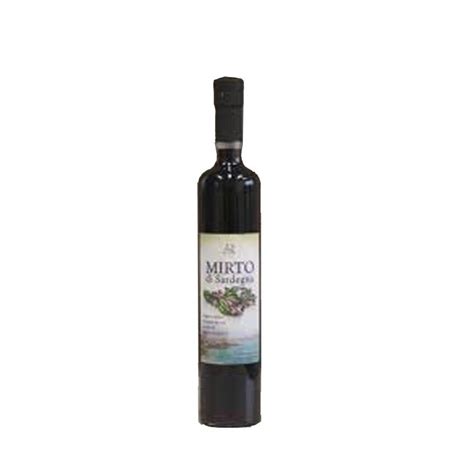
Mirto Rosso is made by macerating the wild berries of the myrtle shrub, Myrtus communis, in neutral spirit for weeks, then sweetening the infusion. Mirto Bianco uses the leaves and young shoots instead, producing a pale, more herbal liqueur. Nothing else is required — the character comes from the plant, which grows across the Sardinian maquis, and from how long the berries steep.
- ✦Wild myrtle berries (Myrtus communis)
- ✦Myrtle leaves (in Mirto Bianco)
- ✦Neutral spirit
- ✦Sugar
- ✦Water
History of the Brand
Myrtle has been part of Sardinian life for millennia — used in cooking, as a medicine, and as a symbol in Mediterranean myth. The liqueur grew out of household maceration, made each autumn when the berries ripened.
Commercial bottling began in the late nineteenth century and expanded sharply in the 1980s and 1990s, when Mirto became Sardinia's signature product and a fixture of the island's tourism economy.
Producers now emphasize wild-harvested berries and traditional cold maceration, distinguishing genuine Mirto from cheaper versions made with extracts and colorants.
On the island it is poured automatically at the end of a meal, straight from the freezer, and offered to guests as a matter of hospitality rather than as a menu item.
Tasting Characteristics
Blueberry and blackcurrant with pine resin, juniper and a wild-herb note off the maquis.
Syrupy and sweet with dark berry fruit, then a resinous, faintly bitter herbal middle that keeps it from tasting like a fruit cordial.
Medium, cooling and slightly astringent, with lingering myrtle and pine.
Flavor meter
How to serve it
- 01Straight from the freezer in a small glass — the only serve most Sardinians recognize.
- 02Over vanilla or lemon gelato.
- 03With tonic and a lemon twist for a long summer drink.
- 04Topped with prosecco for a purple, berry-scented spritz.
- 05Try Mirto Bianco alongside the rosso — the leaf version is drier and greener.
Where to Get It
Common in Sardinia and in Italian specialty shops; less consistently distributed elsewhere. Read the label for wild-harvested berries and no added coloring.
Italian specialty importers
The best route abroad — expect $25–$40 for a good bottle.
Online spirits retailers
Listed by retailers with a deep Italian range; small Sardinian producers are worth seeking out.
In Sardinia
Every grocery store, plus farm producers who sell direct.
Affiliate buying links coming soon.
Mirto di Sardegna FAQ
What is Mirto?
+
Mirto is a Sardinian liqueur made by macerating wild myrtle berries in neutral spirit and sweetening the result. It is typically 28–32% ABV and drunk as a digestivo.
What is the difference between Mirto Rosso and Mirto Bianco?
+
Rosso is made from the berries and is deep purple, sweet and fruity. Bianco is made from myrtle leaves and young shoots, and is pale, drier and more herbal.
What does Mirto taste like?
+
Blueberry and blackcurrant fruit with pine resin and juniper, sweet up front and slightly astringent and herbal on the finish.
How do you serve Mirto?
+
Frozen. Keep the bottle in the freezer and pour it into a small chilled glass after dinner. It also works over gelato or lengthened with tonic.
Is Mirto an amaro?
+
No — it is a fruit liqueur rather than a bitter one, though its resinous myrtle character gives it more herbal complexity than most berry liqueurs, and it fills the same after-dinner role as amaro.