Ingredients
A closely guarded recipe of thirteen alpine herbs, roots, berries and barks, most of them foraged in the mountains above Bormio, macerated in neutral spirit and then rested in large oak barrels.
- ✦Mountain wormwood (assenzio)
- ✦Gentian root
- ✦Yarrow
- ✦Juniper berry
- ✦Alpine mint
- ✦Chamomile
- ✦Wild angelica
- ✦Star anise
- ✦Bitter orange peel
- ✦Rhubarb root
- ✦Pine and fir shoots
- ✦Cinnamon bark
- ✦Cardamom
History of the Brand
Braulio was created in 1875 by Francesco Peloni, a Bormio pharmacist who blended local alpine botanicals into a tonic sold across the counter as a digestive remedy. The name comes from Monte Braulio, the peak that rises above the Stelvio Pass just outside town.
For decades it stayed a Valtellina secret — a bottle passed around after dinner in mountain rifugi and ski huts. The Peloni family kept production in Bormio, aging the liqueur in enormous Slavonian oak casks stored in cellars beneath the town, where the cold alpine air slows oxidation and softens the bitterness.
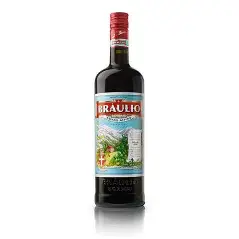
The brand remained family-run for four generations before Campari Group acquired it in 2021. Production, aging, and the original recipe stayed in Bormio, and the bottle still carries the mountain silhouette that has been on the label since the earliest years.
Among American bartenders Braulio became the gateway alpine amaro in the 2010s: the bottle that explained why 'herbal' and 'bitter' were not the same thing, and the one poured to convert Fernet skeptics.
Tasting Characteristics
Pine needle and crushed mint up front, then dried orange peel, menthol and a faint smell of woodsmoke and old wood cellar.
Silky and only lightly sweet. Fir resin and juniper lead, followed by cola nut, caramel and star anise, with gentian bitterness building underneath rather than on top.
Long, cooling and dry — the menthol lingers like an alpine breath while the oak leaves a soft caramel warmth.
Flavor meter
How to serve it
- 01Neat at cellar temperature in a small cordial or Nick & Nora glass — the traditional Bormio after-dinner pour.
- 02On a single large rock with a wide strip of orange peel.
- 03Chilled straight from the freezer alongside an espresso.
- 04Split-based in a Negroni or Boulevardier in place of half the sweet vermouth.
Where to Get It
Widely distributed in the US and Europe, and easy to find in any shop with a serious Italian shelf. In Italy it is stocked in nearly every bar and alimentari in Lombardy.
Local bottle shops
Look in the amaro or Italian liqueur section — most well-stocked stores carry it around $32.
Online spirits retailers
Shipping availability depends on your state; expect $30–$40 plus delivery.
In Bormio, Italy
The distillery in the town center runs tastings and cellar tours, and sells bottles you will not see abroad.
Affiliate buying links coming soon.